- The U.S. dollar interest rates have been rising rapidly since 2022, while they are unlikely to return to the ultra-low levels seen in 2020-2021 in the near term.
- Rising interest rates are pushing up the U.S. dollar financing costs for development financing institutions (DIFs) in developing countries.
- Emerging market (EM) currencies, such as the RMB, have the potential to provide alternative financing vehicles for DFIs.
- Multilateral development banks (MDBs) established by developing countries can contribute to the exploration of new DFI financing models supported by emerging market currencies.
This article is shared based on the Creative Commons 4.0 agreement, please cite “ David Marx, 2022, “Development Financing via Emerging Market Currencies in A High-Interest US Dollar Environment”, Marx Review”.
Since the beginning of 2022, benchmark interest rates in the US, Euro Area (EA), and other developed countries have been rising rapidly, reversing the ultra-low-rate environment seen in the past three years. With tight energy supplies, intensified trade and financial conflicts, dim prospects for manufacturing investment, and unabated labor shortages, the growth of aggregated supply in developed countries is hard to accelerate, which leaves job of controlling inflation mostly to containing aggregated demand. As such, risk-free interest rates for the US dollar and peers are hardly expected to return to ultra-low levels if central bankers are committed to preserving price stability.
This has been leading to major challenges to the Foreign-Exchange Financing Activities (FX-financing) for Development Financing Institutions (DFIs) in developing countries. In a low-interest-rate environment, emerging market (EM) DFIs often rely on FX bonds (mostly USD bonds) to reduce financing costs. However, in the current environment of an appreciating and high-interest US dollar, the yields of DFIs’ FX bonds have been rising rapidly, making it harder to refinance these debt instruments. Should this continues, high financing costs would twinkle down to EM infrastructure projects, hampering their financial sustainability and sustainable development in EMs.
Low-interest-rate EM currencies provide an alternative solution for DFIs’ FX-financing.In other words, given an appreciating and high-interest rate US dollar, DFIs in EM may find it worthwhile issuing FX bonds denominated in EM currencies, which have low-interest rates, stable exchange rates, relatively wide usage in international transactions, and deep and open bond market, to support domestic infrastructure projects. For instance, Renminbi could be a nice candidate: its 10-year treasury yield is as low as 2.7%; pegging to a basket of foreign currencies, its bilateral exchange rates against other EM currencies is relatively stable; it is the only EM currency in the IMF SDR basket, and China’s bond market ranks among the global top 3 in terms of outstanding volume.
In the process of exploring DFI financing models based on EM currencies, multilateral development banks (MDBs) established by EM countries can help bridge the information gap between the EM DFIs and the financial market where the selected EM currency is issued. As an example, New Development Bank established by the BRICS countries can facilitate the development financing in Renminbi. On the one hand, with employees from all BRICS countries, the NDB can, in theory, generate risk pricing more objectively and realistically based on its familiarity with member country economies and their DFIs (Indian Eximbank, for instance). On the other, headquartered in China, NDB maintains a close relationship with Chinese financial institutions, and is already a recognized panda bond issuer. With proper policy support from the Chinese government, such as qualifying NDB panda bonds to repo transactions, NDB can help channel Renminbi financing to DFIs in BRICS, contributing to their infrastructure investment and sustainable development.
I. The U.S. dollar interest rates have been rising rapidly and are expected to remain high in the medium term
Risk-free interest rates in the US and the Euro Area (EA) have been rising rapidly since the end of 2021. In the first 9 months of 2022, LIBOR (6 months, USD) increased from 0.34% to 4.27%, while EURIBOR (6 months) increased from -0.54% to 1.78%. Meanwhile, long-term borrowing costs also soared: as of October 6, 2022, the yield on the 10-year U.S. Treasury reached 3.83%, 2.3 times the level at the beginning of 2022.
It is highly improbable that risk-free rates in advanced economies will return to ultra-low levels in 2020 and 2021, as the supply bottlenecks associated with inflation momentums are hard to be relieved because of the following four reasons:
- For energy, OPEC’s latest decision to cut production signals its intention to keep oil prices elevated, while new investment in fossil fuels has seen no significant pick-ups.
- For international trade,the fragmentation of global trade and financial networks is still intensifying, hindering the flow of consumer goods and supply-chain products.
- For manufacturing investment, recession risks and high financing costs dampens entrepreneurs’ confidence, slowing the formation of new production capacity in goods.
- For the labor force, the labor force participation rate in developed countries (especially the US) has not returned to the pre-pandemic levels, while nationalism sentiment makes it difficult to attract low-skill workers with easing migration policies.
In an economy where aggregated supply is capped, prices can be sensitive to an increase in aggregate demand. In other words, even if inflation moderates in 2023 due to demand contraction, easing monetary policies may once again result in a shortfall of supply, pushing inflation back to elevated levels. As long as supply bottlenecks persist, central bankers’ flexibility in promoting easing monetary policies will remain limited. In fact, the FOMC’s latest median forecast shows that the U.S. federal funds rate will peak at 4.6% next year, before slowly coming down to 2.9% in 2025. Accordingly, the effective federal funds rate will average about 3.8% over the next three years, roughly equivalent to 2007 levels (Figure 1).
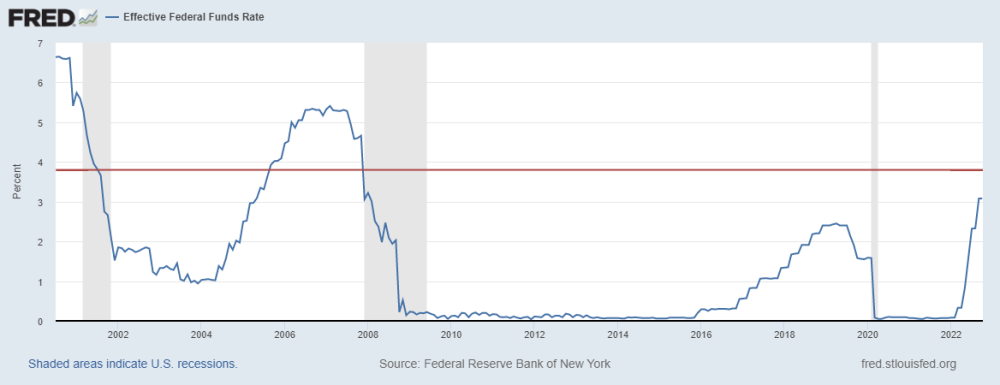 Figure 1 U.S. Effective Federal Funds Rate
Figure 2 graphs the 10-year US treasury yields since 2000, which shows that the current high yields are merely normal levels in history. Yields picked up around 3% during the 2016-2019 tightening cycle, which was lower than the average of 2.3% in 2012-2018, but considerably lower than the 4.5% in 2003-2007. If the 10-year Treasury Yields also rebound to the level in around 2007 alongside the Federal Funds Rate, they should average around 4.5% in the coming three years, significantly higher than the average of 1.6% in 2019-2021. Even if long-term rates fall back due to yield inversion, they are more likely to stabilize around 3.2%, which is the average during 2007-2012. Either way, a world of ultra-low-rate financial environment has most likely come to an end in the US and the EA.
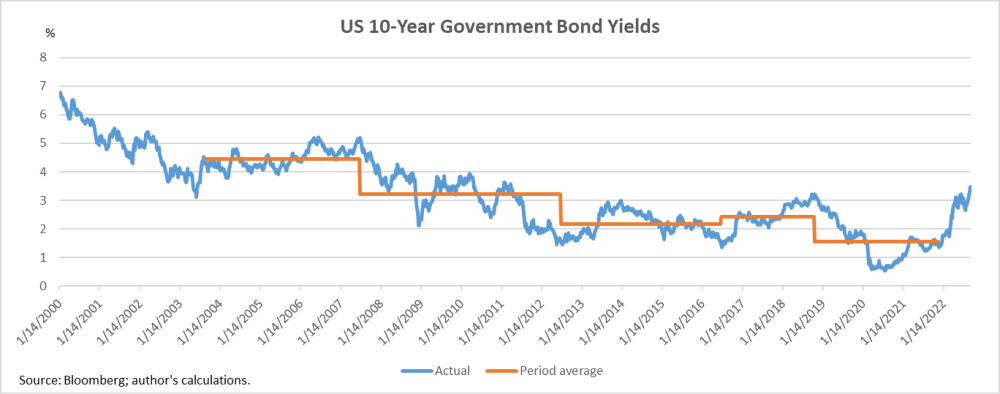 Figure 2 10-Year U.S. Treasury Bond Yields
II. An appreciating US Dollar with high-interest rates is pushing up the cost of FX financing for development financing institutions (DFIs) in Emerging Markets (EMs)
DFIs (such as sovereign development banks, export-import banks, and other policy banks) are crucial for infrastructure and sustainable development projects in EMs. Large EM DFIs not only issue debt domestically, but also sell bonds denominated in hard currencies (mostly US dollar) to cut funding costs, as domestic interest rates in EMs are usually considerably higher than in advanced economies. For example, as of the end of September 2022 1,
- the Export-Import Bank of India (India Eximbank) had 11 outstanding US dollar bonds of USD 9.3 billion, accounting for 67.5% of its overall bond financing and 61.1% of its total liabilities;
- the Brazil Development Bank (o Banco Nacional de Desenvolvimento Econômico e Social (BNDES) has 4 outstanding US dollar bonds of USD 5.5 billion, accounting for 29.1% of its total liabilities;
- theExport-Import Bank of China (China Eximbank) has 41 outstanding US dollar bonds of USD 14.57 billion, accounting for 2.1% of its overall bond financing;
- the China Development Bank(China Development Bank, CDB) has a total of 10 outstanding US dollar bonds of USD 5.95 billion, accounting for 0.35% of its overall bond financing.
EM DFIs’ FX financing costs soared as US dollar rates climbed up. For India Eximbank 2, its 5-year USD bond yield was recorded at 5.8% by the end of September 2022, 371 basis points (bps) higher than a year ago (Figure 3). Due to the yield curve inversion in the US Treasury bonds, the 1-year yield of India Eximbank saw a larger increase of 470 bps. With flatter curves, India Eximbank would not be able to reduce its US dollar funding costs by issuing bonds with shorter maturities, execerbating the problem of high-cost refinancing.
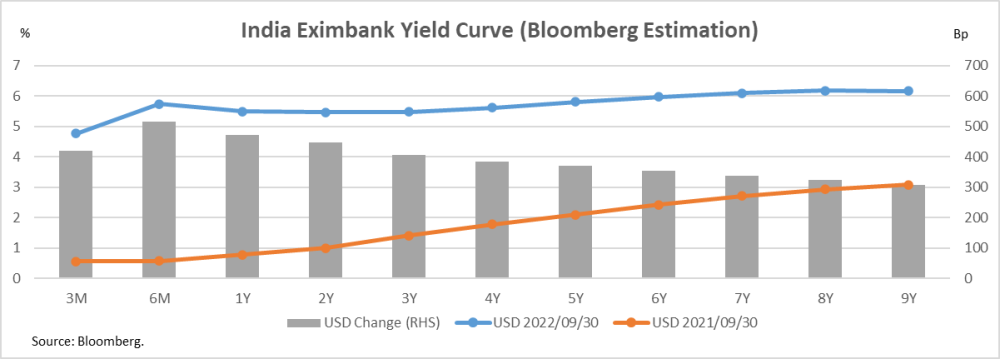 Figure 3 The Yield Curve for US Dollar Bonds, India Eximbank
US dollar yields of Chinese DFIs also rose significantly. China Eximbank’s 5-year yield jumped by 297 bps in the past year to 4.3% at end-September 2022, while its 1-year yield rose by 402 bps to 4.5% (Figure 4). Meanwhile, China Development Bank’s 5-year yield increased by 274 basis points to 4.2% at the end of September 2022, while its 1-year yield rose by 423 bps to 4.6%.
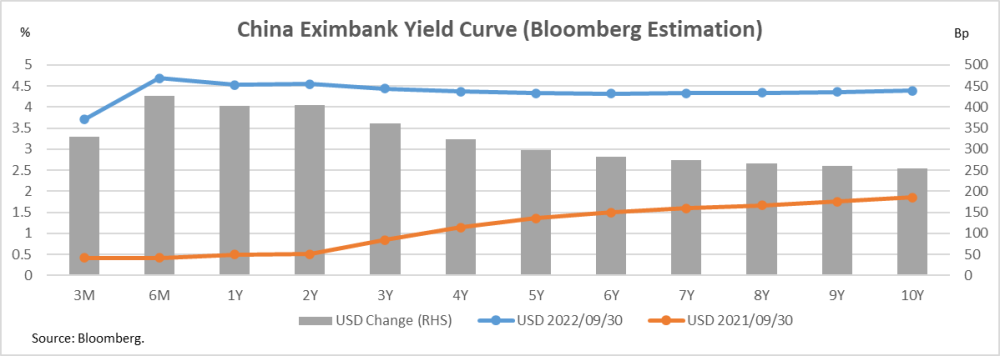 Figure 4 The Yield Curve for US Dollar Bonds, China Eximbank
With the rise of US dollar bond yields, EM DFIs’ spread between the domestic currency and foreign exchange narrowed rapidly. As of the end of September 2022, the 5-year yield India Eximbank’s rupee bonds was recorded at 7.6%, 181 bps higher than its US dollar bonds, while a year ago the spread was 374 basis points (Figure 5). For Chinese DFIs, the spread was recorded as negative in 2022 as People’s Bank of China has been cutting policy rates in the past months. By the end of September, China Eximbank 5-year RMB bond yield was recorded at 2.73%, 159 bps lower than its USD yields, while a year ago its RMB yield was 172 bps higher than that on USD bonds.
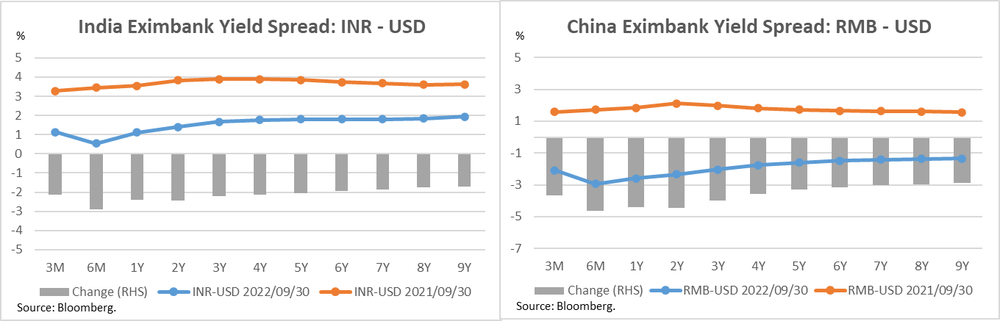 Figure 5 Yield Spread between domestic and foreign currency bonds, India Eximbank and China Eximbank
According to Bloomberg, from 2023 to 2025, India Eximbank, BNDES, and CDB will have maturing debt amounting to USD 1.3 billion, USD 5.5 billion and USD 4.45 billion, respectively, accounting for their respective outstanding USD bond balances by 14%, 100%, and 74.8%. Although coupon rates are fixed upon issuance, the rise in bond yields is likely to push up DFIs’ refinancing costs.
Passing the increasing refinancing costs to DFIs’ clients (firms borrowing from sovereign policy banks) will push up the borrowing costs of infrastructure projects, while digesting them internally may hamper the profitablity and financial sustainability of DFIs, detrimental to their long-term development. Therefore, if the high-interest rate of US dollars is to persist, DFIs in EM should start to explore alternative cheap currencies to support domestic infrastructure investment and sustainable development projects.
III. EM currencies, such as Renminbi, can play a bigger role in development financing
To supplement US dollar bonds, EM DFIs can borrow in currencies issued by EMs to balance their funding costs. For most DFIs, this is not “local currency financing”, but foreign exchange financing denominated in currencies from another Emerging Market economy to utilize lower interest rates. A candidate currency for such operations should at least meet the following four requirements:
- Low Treasury Yields. For any sovereign currency, treasury yields usually provide a lower bond for long-term financing as they are associated with the lowest default risk. Therefore, a currency with low government bond yields provides cost-saving incentives for DFIs from another country to borrow.
- A stable foreign exchange rate. For sovereign DFIs, issuing FX bonds is often associated with currency mismatch. Therefore, large fluctuations in foreign exchange rates will introduce unnecessary risk exposure and higher expenses on hedging, pushing up the overall financing cost for bond issuance.
- A relatively-wide usage in international transactions. Upon receiving the borrowing proceeds, DFIs (or their clients) either sell them on the foreign exchange market for its domestic currency or use it directly to settle trade/financial transactions. Without a wide range of usage, DFIs will be disadvantaged when utilizing the borrowing proceeds.
- A larger and open bond market. Bond issuance is the major form of DFI financing. Therefore, a large, deep, and open bond market can greatly reduce the transaction cost of DFI bond issuance, while preventing excess market volatilities in bond trading.
Among various EM currencies, Renminbi stands out as a good candidate judging by the above criteria, and has the potential to make greater contributions to development financing in EMs.
First of all, the yields on Chinese government RMB bonds (CGB) are at a relatively low level among EMs. Following the recent easing monetary policies, the 10-year CGB yield declined to 2.7% by the end of September 2022 (Figure 6), lower than that in India, Brazil, the Philippines, Mexico, and Indonesia, and similar to that in Singapore, South Korea, and Thailand. 3 Meanwhile, the long-term CGB yields have been very stable throughout history. Since 2012, the 10-year CGB yield fluctuated between a range of 4.57% and 2.55%, similar to that of Singapore, Malaysia, and South Korea.
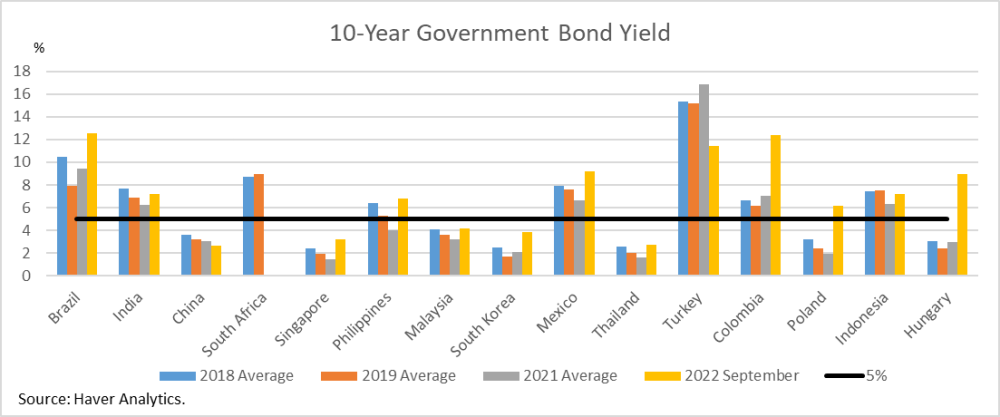 Figure 6 10-Year Government Bond Yield in Local Currency for Selected EM Economies
Second, China’s foreign exchange rate is relatively stable. In the 40 years of Reform and Opening-Up, China has never experienced a systematic balance of payment crisis. Since the reform of Foreign Exchange Rate Formulation Mechanism in 2015, Renminbi has been targeting its value against a basket of currencies. Therefore, when the US dollar appreciates against EM currencies, Renminbi will appreciate to a lesser extent, reducing the bilateral exchange rate volatility between Renminbi and other EM currencies. Figure 7 graphs the exchange rate between the Brazilian Real (Indian rupee) against the US dollar (Renminbi), in terms of BRL (INR) per USD (RMB), where a higher value in the graph represents depreciation of the BRL (INR) against the dollar (renminbi). The graph shows that, around 2019-2020, when the US dollar appreciates, Real and Rupee’s bilateral exchange rate against the Renminbi is more stable.
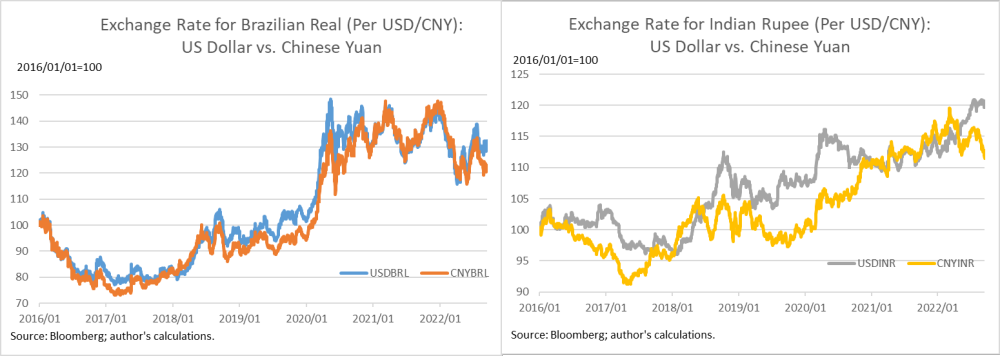 Figure 7 Bilateral Exchange Rates of Brazilian real and Indian rupee Per US dollar and Renminbi
Thirdly, Renminbi is the most widely used EM currency in international transactions. Renminbi now takes 12.28% in the IMF SDR basket, surpassing that of the Japanese Yen and the British Pound. Joining the SDR basket ensures that Renminbi is “freely usable”, that is, it has to be “widely used to make payments for international transactions and widely traded in the principal exchange markets”.4 Meanwhile, it is also ensured that “a member can use the currency received from the IMF either directly or indirectly (by exchanging it into another currency without disadvantage) to address a balance of payments financing need.”5 Therefore, even though China’s capital account is not fully liberalized, EM entities will be able to use Renminbi proceeds to settle international trade and financial transactions as needed without major restrictions. In reality, although Renminbi has already been the most widely used EM currency in international transactions: according to SWIFT, from January to August 2022, the international payment market share of RMB averaged 2.37%, ranking fifth in the world, higher than that of the Hong Kong dollar (1.14%), the Singapore dollar (1.00%), the Thai baht (0.71%) ), the Polish Zloty (0.58%), the Malaysian Kilint (0.37%) and the South African Rand (0.31%).6
Finally, China has the largest bond market among EM economies, which is open to international investors. According to the SIMFA Capital Market Fact Book 2022 7, by the end of 2021, the global outstanding fixed-income securities totaled USD 127 trillion, of which the US, the European Union (EU), China, and Japan each accounts for 39%, 19%, 17%, and 10%, respectively. Among others, Singapore and Hong Kong each accounted for 0.5%, while EM economies accounted for 1.4% as a whole. In terms of long-term bond issuance in 2021, the US ranked first with a total issuance of USD 9 trillion, China ranked second with USD 5.4 trillion, while Japan and the EU issued USD 3.6 trillion and USD 3.5 trillion, respectively. For other EMs, Hong Kong and Singapore issued 107 billion and 59 billion, respectively, while issuance from the rest totaled USD 2.7 trillion. Meanwhile, international investors have become regular participants in the RMB bond market. As of August 2022, foreign investors held onshore RMB bonds totaling RMB 3.2 trillion, accounting for 2.6% of China’s total outstanding bonds in custody.
IV. Multilateral Development Banks (MDBs) established by EMs can help promote development financing in EM currencies
Promoting DFI borrowing in low-interest-rate EM currencies requires bridging the information gap between borrowers and lenders. Taking the RMB borrowing of India Eximbank as an example, on the one hand, Chinese financial institutions need to have a sufficient understanding of the Indian economy and its development financing business models, while, on the other hand, Indian Eximbank needs to be familiar with China’s bond market practices and investment banks. Otherwise, Chinese institutions may ask for high yields to compensate for their perceived risks, while India Eximbank may have to pay for excess transaction costs to learn regulations and obtain legal and underwriting services.
In reality, bridging the above-mentioned gap is not easy. For many Chinese investors, the Indian economy and its policy banks are harder to get familiar with, as there are fewer reports/analysts on the topic. For India Eximbank, learning Chinese laws and regulations, finding underwriters, and communicating with foreign investors are costly for the language barriers, and the fact that many of the Chinese practices are different from advanced economies.
Fortunately, MDBs, especially those established by and headquartered in EMs, can be helpful in the exploration of DFI financing models via EM currencies. An MDB can act as an intermediary for development financing, as has expertise in both member country economies and EM financial markets. In the above example of India Eximbank’s RMB borrowing, the New Development Bank (NDB), established by the BRICS countries and headquartered in Shanghai, China, will be able to bridge the information gap. With many staff and senior managers coming from India, the NDB is familiar with the Indian economy and the India Eximbank, and has the ability to price its borrowings more objectively. Meanwhile, as a regular panda bond issuer on China’s onshore market with high ratings, the NDB can issue RMB bonds at relatively low costs. Given the volatile international financial environment, Chinese investors feel more comfortable holding its bonds as they know the institution better.
Therefore, the model where NDB issues RMB bonds and then lends them to India Eximbank may prove more efficient than India Eximbank issues RMB bonds by itself. This explains the large spread between the RMB bonds of India Eximbank and the NDB (both maturing in 2026), as is shown in Figure 8. In the first quarter of 2022, as the turmoil in the international financial market intensified, the yield spread between the two jumped from about 50 basis points to roughly 150 basis points. With proper facilitating mechanisms from China, such as increasing the NDB bond liquidity by qualifying them for repo transactions, Renminbi could play a bigger role in facilitating the EM development financing with the contribution of MDBs.
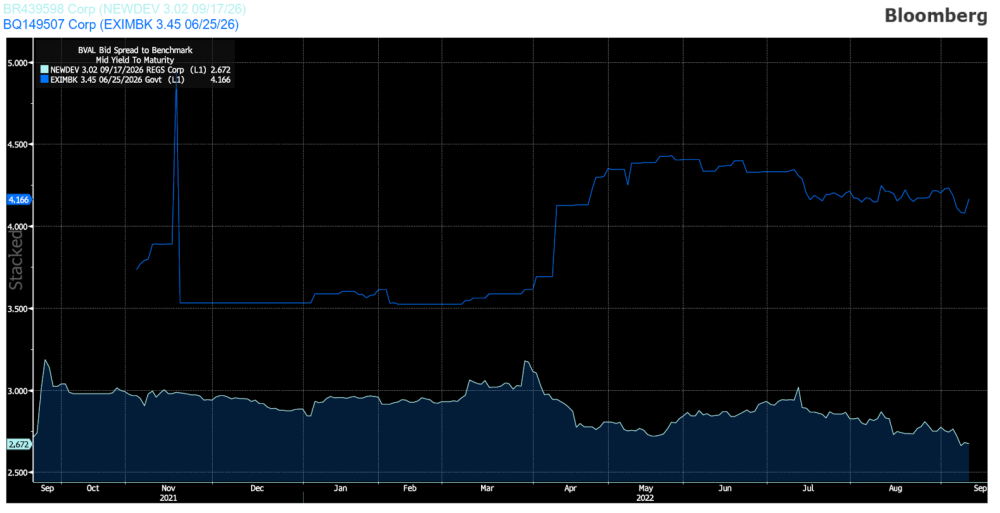 Figure 8 RMB Bond Yield of the New Development Bank (Green) and India Eximbank (Blue), Maturing in 2026
Notes
-
Obtained from Bloomberg. ↩
-
The yield curve is estimated by Bloomberg based on bond transaction data. ↩
-
In addition to the economies listed in Figure 6, Taiwan Province of China has a government bond yield of 1.4%. ↩
-
See https://www.imf.org/en/About/Factsheets/Sheets/2016/08/01/14/51/Special-Drawing-Right-SDR. ↩
-
See See https://www.imf.org/external/np/exr/faq/sdrfaq.htm#four. ↩
-
Data obtained from WIND China Macroeconomic Database. ↩
-
See https://www.sifma.org/wp-content/uploads/2022/07/CM-Fact-Book-2022-SIFMA.pdf. ↩
