Disclaimer: This personal research note may contain errors and is provided for reference only. —
Financial Connectivity among the BRICS-5: An Analysis Based on Foreign Bank Subsidiary and Branch Networks
Introduction
In 2023, Lula, returning to the Brazilian presidency for a third term, visited the New Development Bank and posed what has become known as the “Lula Question”: “Every night I ask myself: why must all countries settle in US dollars? Why can’t the Renminbi, or some other currency, become an international settlement currency?”
The “Lula Question” is a sharp observation of a veteran politician: financial connectivity among developing countries are far weaker than their real-economy linkages. This gap has many symptoms, the most visible being that trade between two developing countries is typically settled in a developed-country currency. More telling still, even when two developing countries agree to settle in their own currencies, the transaction often has to be routed through developed-country financial institutions.
This paper measures financial connectivity among the BRICS-5 in a more concrete way and shows where they fall short. The question examined here is simple: whether banks from BRICS-5 countries have established subsidiaries or branches in other BRICS-5 countries.
This lens is chosen for three reasons. First, banks are the most fundamental institutions of any financial system; connectivity of the banking network is the foundation of financial linkage. Second, a country’s own banks are the most important vehicle and channel for local currency business, so mutual establishment is the precondition for large-scale bilateral local-currency settlement. Third, statistics on foreign bank institutions are usually publicly available.
This analysis reveals the following stylized facts:
- The network of foreign branches and subsidiaries among BRICS-5 banks is far from complete. There is no home-country institution with a subsidiary or branch between Brazil and Russia, Brazil and India, Brazil and South Africa, or Russia and South Africa. Branches and subsidiaries of developed-economy banks remain the bulk of foreign bank presence in BRICS-5 markets.
- China and India have the potential to become core nodes. Chinese banks have subsidiaries or branches in all four other BRICS-5 countries, and China hosts subsidiaries or branches from Brazil, Russia and India (South Africa is absent). Indian banks operate in China, Russia and South Africa (Brazil is absent), while India hosts institutions from China, Russia and South Africa (Brazil is absent).
- A multilateral institution established by the BRICS-5 could play a special role. If a supranational institution jointly created by the five countries holds accounts at the major banks of each BRICS-5 country, and those major banks in turn hold accounts at this supranational institution, it could serve as a core node and help make financial linkages among the five denser.
Data Sources
Most countries publish lists of foreign bank subsidiaries and branches operating on their territory, which provides the basis for this analysis.
- Brazil: The Central Bank of Brazil (BCB) publishes monthly “National financial system evolution information”, which details foreign banks’ branches, subsidiaries and representative offices in Brazil, as well as Brazilian institutions’ branches, subsidiaries and representative offices abroad. See https://www.bcb.gov.br/en/statistics/evolutionmonthnfs?ano=2026.
- Russia: The Central Bank of Russia (CBR) does not publish a separate directory of foreign institutions, but it does publish a full list of credit institutions on a regular basis. Active banks can be screened from this list, their English names can be located in the CBR system by registration number, and their parent banks can be identified via AI search to determine which are branches of foreign institutions. This method may contain errors and omissions, but it still offers useful insight. The credit institution list is at https://www.cbr.ru/banking_sector/credit/FullCoList/; English names can be looked up at https://www.cbr.ru/finorg/.
- India: The Reserve Bank of India (RBI) publishes a list of banks operating in India, including foreign branches and wholly foreign-owned subsidiaries. See https://www.rbi.org.in/Scripts/AboutUsDisplay.aspx?pg=Foreign.htm.
- China: The National Financial Regulatory Administration (NFRA) periodically publishes a “List of branches of foreign banks and banks from Hong Kong, Macao and Taiwan”, while its “List of legal-person banking institutions” includes foreign bank legal entities. Combined, the two give the list of foreign bank subsidiaries and branches operating in mainland China. See https://www.nfra.gov.cn/cn/view/pages/governmentDetail.html?docId=1268142\&itemId=863\&generaltype=1 and https://www.nfra.gov.cn/cn/view/pages/governmentDetail.html?docId=1268146\&itemId=863\&generaltype=1.
- South Africa: The South African Reserve Bank (SARB) periodically publishes “South African Registered Banks and Representative Offices”, covering foreign banks’ branches, subsidiaries and representative offices. See https://www.resbank.co.za/en/home/what-we-do/Prudentialregulation/sa-registered-banks-and-representative-offices.
Country Overview
Brazil
A total of 68 foreign bank branches and subsidiaries operate in Brazil (branches, commercial banks and multiple banks combined), of which 56 have parent companies in developed economies and 12 in developing economies. Among the developed-economy institutions, 17 come from North America (16 from the United States), 11 from Asia (7 Japan, 6 Korea) and 28 from Europe. Among the developing-economy institutions, 6 come from Asia (all from China), 5 from Latin America and 1 from Africa.
Among the BRICS-5, only Chinese banks have subsidiaries or branches in Brazil:
- [CN] Banco Bocom BBM S.A.: a long-established Brazilian private bank controlled by Bank of Communications (of China), one of China’s five largest banks.
- [CN] Banco XCMG Brasil S.A.: controlled by XCMG, a leading Chinese construction machinery group, serving the sales and financing needs of construction equipment.
- [CN] Banco Sany Brasil S.A.: controlled by SANY Group, another leading Chinese construction machinery group, with a similar focus on equipment sales and financing.
- [CN] Banco da China Brasil S.A. / Bank of China (Brasil) Banco Múltiplo S.A.: two registered entities, both subsidiaries of Bank of China.
- [CN] ICBC do Brasil Banco Múltiplo S.A.: the Brazilian subsidiary of Industrial and Commercial Bank of China.
Some non-bank financial institutions in Brazil are also controlled by shareholders from other BRICS-5 countries. Haitong Securities operates investment banking and brokerage entities in Brazil. Chinese investors also control payment institutions such as Klavi, Pagsmile and Alesta; the first two are start-ups, while Alesta is a platform lender set up by CPFL, the Brazilian utility company controlled by State Grid of China, that focuses on electricity bills and prepayments to grid suppliers. iFood Pago is a platform lender controlled by South African investors.
The BCB also publishes the representative offices of foreign financial institutions in Brazil. Four BRICS-5 institutions have representative offices there: Agricultural Bank of China, China Development Bank, Export-Import Bank of India and State Bank of India.
Russia
A total of 37 foreign bank subsidiaries (joint-stock companies and limited liability companies) operate in Russia, of which 21 have parent companies in developed economies and 16 in developing economies. Among the developed-economy institutions, 12 come from Europe, 1 from the United States and 8 from Asia (6 Japan, 2 Korea). Among the developing-economy institutions, 14 come from Asia (4 from China, 4 from Central Asia and the Caucasus) and 2 from Eastern Europe.
Among the BRICS-5, Indian and Chinese banks have subsidiaries or branches in Russia:
- [IN] Commercial Indo Bank Limited Liability Company: originally a joint venture between State Bank of India (SBI, holding 60% of shares) and Canara Bank; wholly owned by SBI since 2022. Established in 2003, it is the main Indian bank handling India–Russia trade settlement.
- [CN] Joint-Stock Commercial Bank BANK OF CHINA (RUSSIA): Bank of China’s Russian subsidiary, established in 1993.
- [CN] Bank ICBC (joint stock company): subsidiary of Industrial and Commercial Bank of China, established in 2007.
- [CN] China Construction Bank (Russia) Limited: China Construction Bank’s Russian subsidiary, established in 2013.
- [CN] Agricultural Bank of China (Moscow) Limited: Agricultural Bank of China’s Russian subsidiary, established in 2014.
India
A total of 44 foreign bank branches and subsidiaries operate in India (42 branches and 2 wholly foreign-owned subsidiaries), of which 28 have parent companies in developed economies and 16 in developing economies. Among the developed-economy institutions, 10 come from Europe, 12 from Asia (6 Korea, 3 Japan, 2 Singapore), 5 from North America (4 from the United States) and 1 from Australia. Among the developing-economy institutions, 12 come from Asia (6 from the Middle East, 3 from South Asia, 2 from China), 2 from Europe (both from Russia) and 2 from Africa.
Among the BRICS-5, Russian, Chinese and South African banks all have a presence in India:
- [RU] JSC VTB Bank: a subsidiary of VTB, a major Russian commercial bank, second only to Sberbank in size. It handles much of Russia’s external finance and project finance and is deeply involved in national strategic projects.
- [RU] Sberbank: Russia’s largest commercial bank.
- [CN] Bank of China Limited: the India branch of Bank of China.
- [CN] Industrial and Commercial Bank of China Limited: the India branch of ICBC.
- [ZA] FirstRand Bank Limited: one of South Africa’s five largest commercial banks.
China
A total of 155 foreign bank institutions operate in China — 114 branches and 41 subsidiaries. Of these, 130 have parent companies in developed economies (95 branches, 35 subsidiaries) and 25 in developing economies (19 branches, 6 subsidiaries). Among the developed-economy institutions, 84 come from Asia (59 from Hong Kong, Macao and Taiwan; 14 Korea; 8 Japan), 24 from Europe, 17 from North America (13 from the United States) and 5 from Australia. Among the developing-economy institutions, 21 come from Asia (13 Southeast Asia, 3 South Asia, 3 West Asia), 2 from Africa (Morocco and Egypt), 1 from South America (Brazil) and 1 from Europe (Russia).
Among the BRICS-5, Brazilian, Russian and Indian banks all have branches in mainland China:
- [BR] Banco do Brasil S.A. Shanghai Branch: Banco do Brasil is one of Brazil’s five largest banks, with a nationwide network, controlled by the federal government of Brazil.
- [RU] VTB Bank (Public Joint-stock Company) Shanghai Branch: VTB, Russia’s second largest bank, handles much of the country’s external and project finance and is deeply involved in national strategic projects.
- [IN] ICICI Bank Limited Shanghai Branch: ICICI is one of India’s largest private banks; Mr. K. V. Kamath, the first president of the BRICS New Development Bank, served for many years as its CEO and chairman.
- [IN] State Bank of India Shanghai Branch: SBI, controlled by the Indian government, is India’s largest commercial bank by assets and branches.
South African banks have no branches or subsidiaries in China. In 2007, however, ICBC announced the acquisition of a 20% stake in Standard Bank, one of South Africa’s five largest banks, for about US$5.5 billion, with the deal closing in 2008 and making ICBC the largest single shareholder. This created a direct China–South Africa banking link (see https://news.cri.cn/20180724/d043561a-d1fc-d7fb-7f23-4beed7a2566a.html).
South Africa
A total of 13 foreign bank branches and subsidiaries operate in South Africa (10 branches and 3 subsidiaries), of which 7 have parent companies in developed economies and 6 in developing economies. Among the developed-economy institutions, 3 come from Europe, 3 from North America and 1 from Asia (a Taiwan-based institution). Among the developing-economy institutions, 5 come from Asia (3 from China, 1 from India, 1 from West Asia) and 1 from Africa (Nigeria).
Among the BRICS-5, Indian and Chinese banks have a presence in South Africa:
- [IN] State Bank of India: the South African branch of SBI.
- [CN] Bank of China Limited, Johannesburg Branch: the South African branch of Bank of China.
- [CN] Bank of Communications Co., Ltd., Johannesburg Branch: the South African branch of Bank of Communications.
- [CN] China Construction Bank Corporation – Johannesburg Branch: the South African branch of China Construction Bank.
Beyond branches and subsidiaries, the SARB also publishes a list of bank representative offices. Three BRICS-5 institutions have representative offices in South Africa: Industrial and Commercial Bank of China, the Export-Import Bank of China and the Export-Import Bank of India.
Stylized Facts
1. By number of institutions, banks from developed economies still account for most foreign subsidiaries and branches in BRICS-5 banking markets.
- In every BRICS-5 country, developed-economy banks make up more than half of foreign subsidiaries and branches; in China and Brazil the share exceeds 80%.
- BRICS-5 banks hold a low share, and the absolute numbers are modest.
Table 1: Number of foreign bank subsidiaries and branches in BRICS-5 markets
| Country | Developed-economy subsidiaries/branches | Developing-economy subsidiaries/branches | BRICS-5 subsidiaries/branches | Developed-economy share | BRICS-5 share |
|---|---|---|---|---|---|
| Brazil | 56 | 12 | 5 | 82% | 7% |
| Russia | 21 | 16 | 5 | 57% | 14% |
| India | 28 | 16 | 5 | 64% | 11% |
| China | 130 | 25 | 4 | 84% | 3% |
| South Africa | 7 | 6 | 4 | 54% | 31% |
2. The network of foreign branches and subsidiaries among BRICS-5 banks remains incomplete.
- No home-country institution has established a subsidiary or branch between Brazil and South Africa, Brazil and Russia, Brazil and India, or Russia and South Africa.
- No BRICS-5 country maintains a complete reciprocal foreign branch and subsidiary relationship with all the other four countries. Here, ‘reciprocal’ means that a country’s banks are present in the partner country and vice versa.
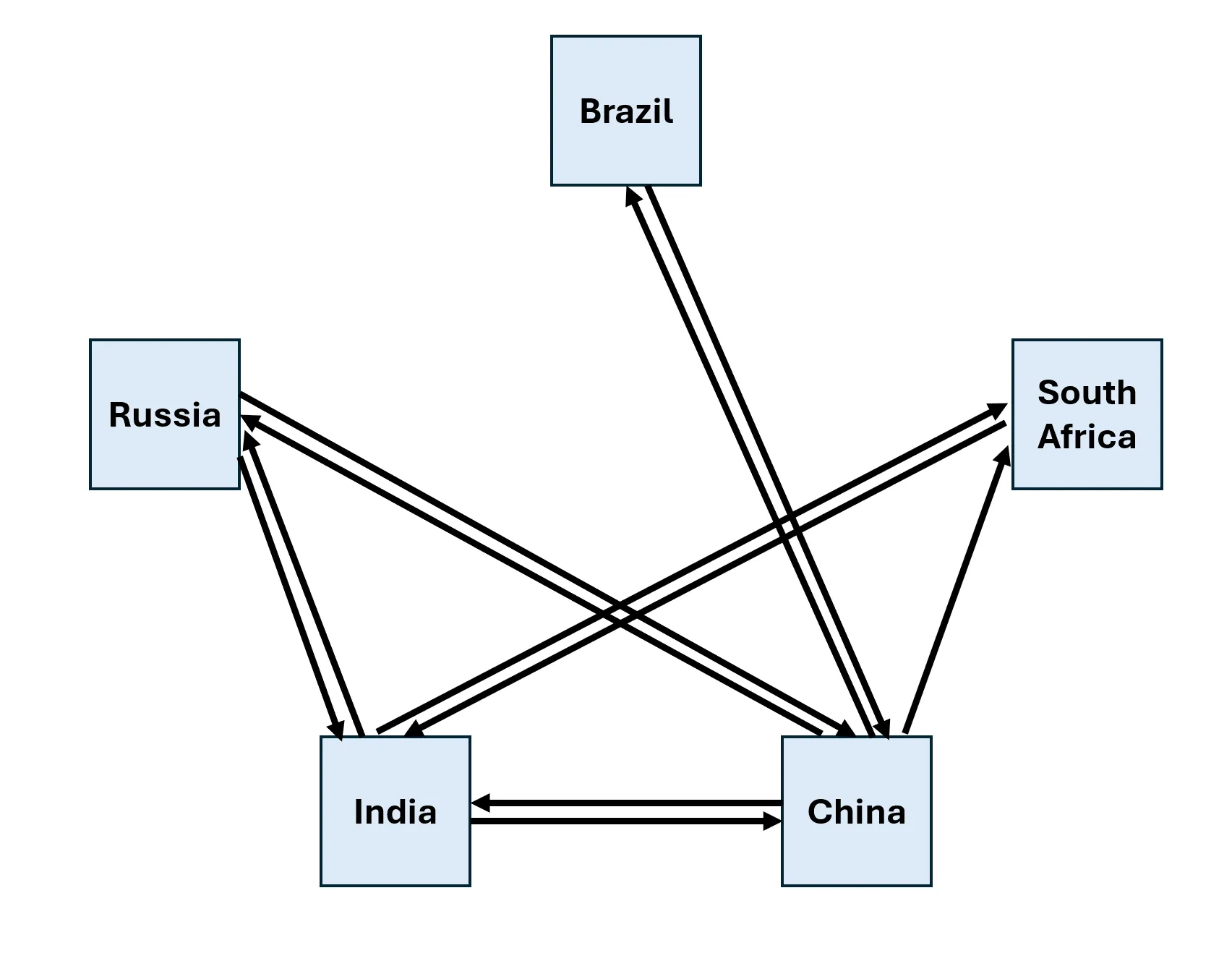
Figure 1: BRICS-5 bank branch/subsidiary network
3. Chinese and Indian banks have the potential to become core nodes of the BRICS-5 banking network.
- Bank of China has a presence in all four other BRICS-5 countries, giving it full coverage of the BRICS-5.
- Industrial and Commercial Bank of China covers the three BRICS-5 countries other than South Africa (where it maintains a representative office).
- State Bank of India covers the three BRICS-5 countries other than Brazil (where it maintains a representative office).
5. A supranational financial institution established by the BRICS-5 can play a multilateral role and help complete the network.
- A bank’s decision to open a subsidiary or branch in another country involves many considerations — economic ties, business volume, compliance costs, risk control — and runs into a chicken-and-egg paradox: without business, a branch is not worth setting up; without a banking link, the underlying business demand may itself be suppressed.
- If a supranational institution established by the BRICS-5 holds accounts at the major banks of each member country, and those banks in turn hold accounts at the institution, the network can be completed in a centralized way.
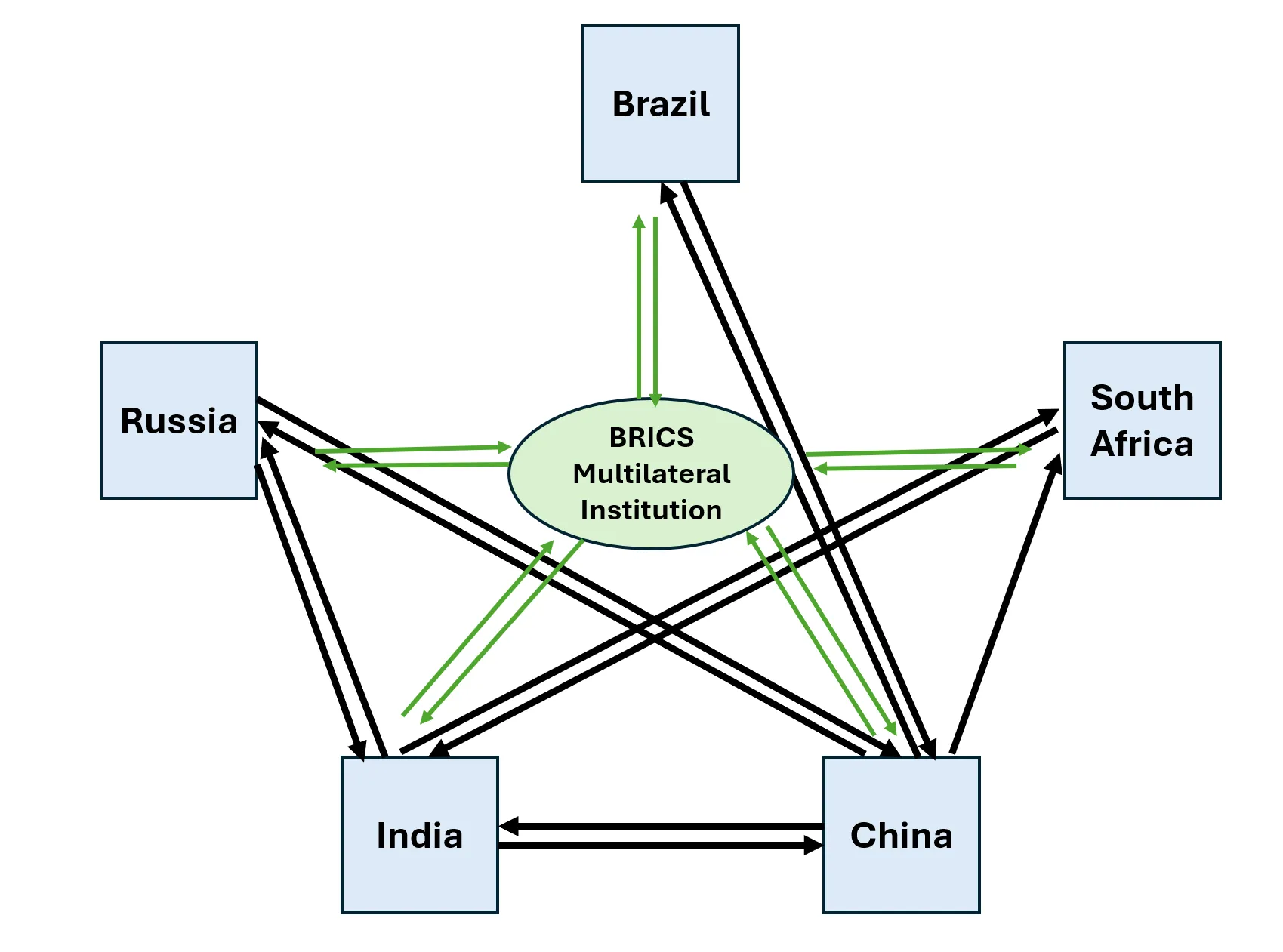
Figure 2: Hub-and-spoke structure via a supranational institution
